Sophia Brown
Program Officer, Nuclear Materials Security
Preventing nuclear terrorism is an enduring challenge that requires vigilance, adaptation, and cooperation among governments, technical experts, and industry, but this coordination is hard to build and harder to sustain.
Bring together senior government officials, technical experts, and international organizations through high-level dialogues to identify emerging risks, build shared priorities, and translate analysis into concrete policy commitments.
A trusted global network that has strengthened international institutions, shaped policy and guidance, and driven practical action to reduce the risk of nuclear terrorism.
NTI’s Global Dialogue on Nuclear Security Priorities is an international initiative focused on strengthening the global nuclear security architecture and advancing practical solutions to evolving nuclear security risks. Through high-level global and regional dialogues, the project convenes government officials, technical experts, international organizations, and industry representatives to address the most pressing nuclear security challenges, develop innovative and actionable approaches to addressing them, and identify opportunities for international cooperation.
The global nuclear security landscape is undergoing profound change. Nuclear energy is expected to expand into new regions, emerging technologies are reshaping risk, geopolitical tensions are rising, stocks of weapons-useable nuclear material are growing, and armed conflict has demonstrated the vulnerability of nuclear facilities and infrastructure. At the same time, international attention to nuclear security has declined. Without sustained leadership, strengthened international cooperation, and modernized approaches to nuclear security, these trends could increase the risk of nuclear theft and sabotage.
The Global Dialogue provides a platform for candid, solution-oriented discussions on the most pressing nuclear security challenges. Discussions focus on strengthening international cooperation, supporting modernization of the International Atomic Energy Agency’s nuclear security guidance, improving implementation of key international commitments, and preparing for major international milestones, including the Review Conference of the Amended Convention on the Physical Protection of Nuclear Material.
Recent meetings have explored:
The initiative increasingly emphasizes regionally driven approaches to nuclear security and works closely with partners around the globe to elevate a range of perspectives and support practical implementation. Through workshops, expert consultations, and follow-on activities, participants develop concrete recommendations and action plans tailored to regional priorities and challenges.
Global Dialogue meetings are conducted on a not-for-attribution basis to encourage candid discussion, build trust among participants, and promote practical problem solving.

Global institutions remain essential, but, increasingly, some of the most practical and forward-leaning work is happening closer to home at the regional level.
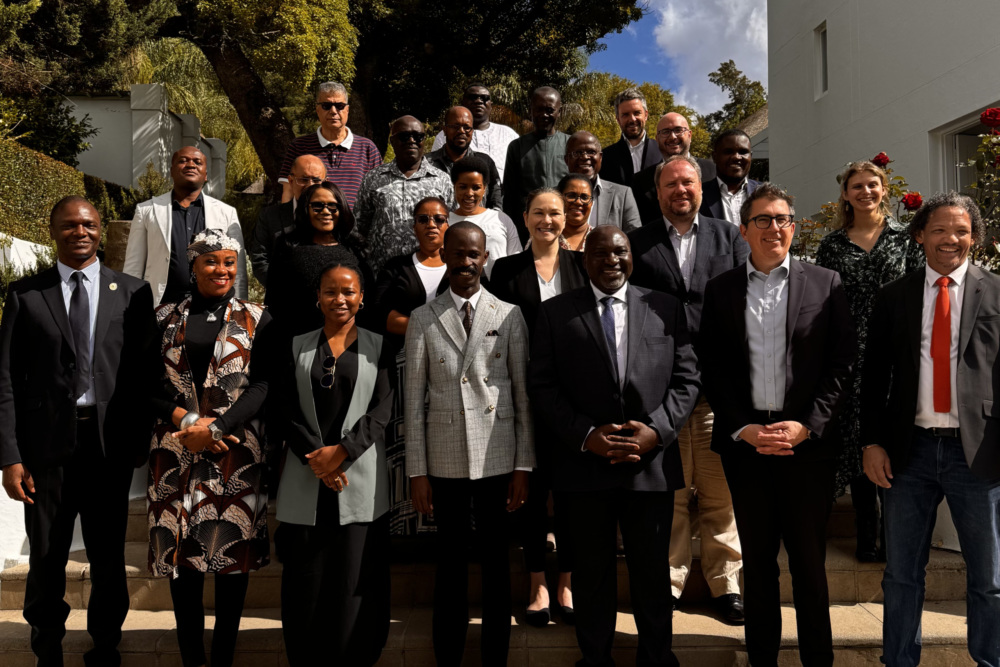
Policymakers and practitioners from over a dozen countries exchanged experience, assessed emerging risks, and explored practical opportunities to strengthen nuclear security cooperation and implementation.

The paper offers practical recommendations to help governments strengthen IAEA nuclear security guidance at a time of profound geopolitical upheaval.
This paper offers actionable ideas to help governments strengthen IAEA nuclear security recommendations’ effectiveness, adaptability, and long-term resilience amid rapid technological change and evolving risks.

The dialogue highlighted the importance of translating ideas into implementable actions amid an evolving regional nuclear security landscape.
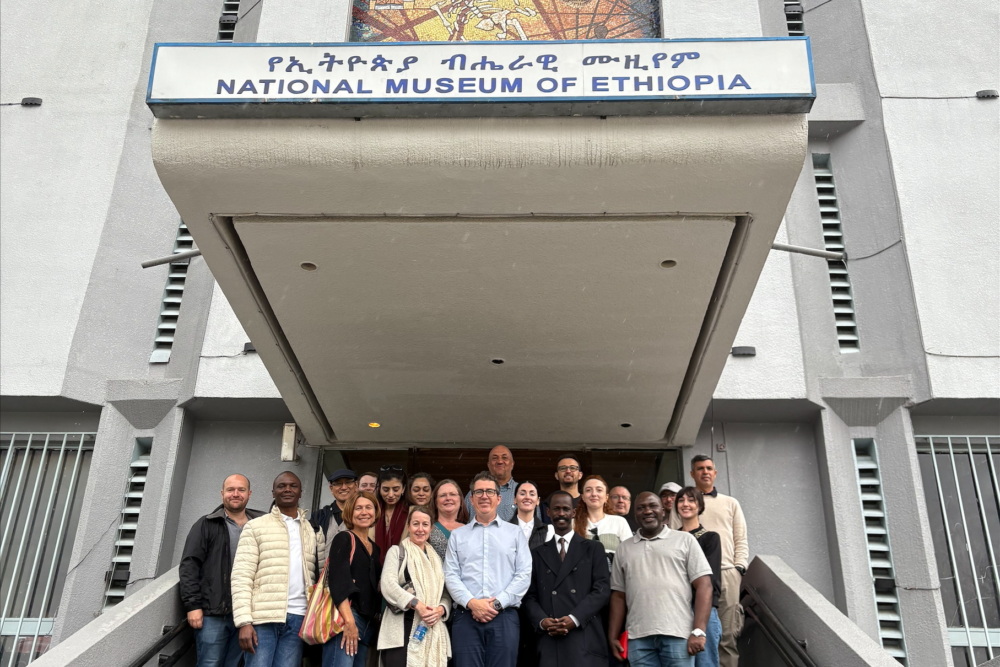
More than 30 nuclear security leaders gathered in Ethiopia to develop stronger International Atomic Energy Agency (IAEA) nuclear security recommendations and plans to support the Amended Convention on the Physical Protection of Nuclear Material (A/CPPNM).
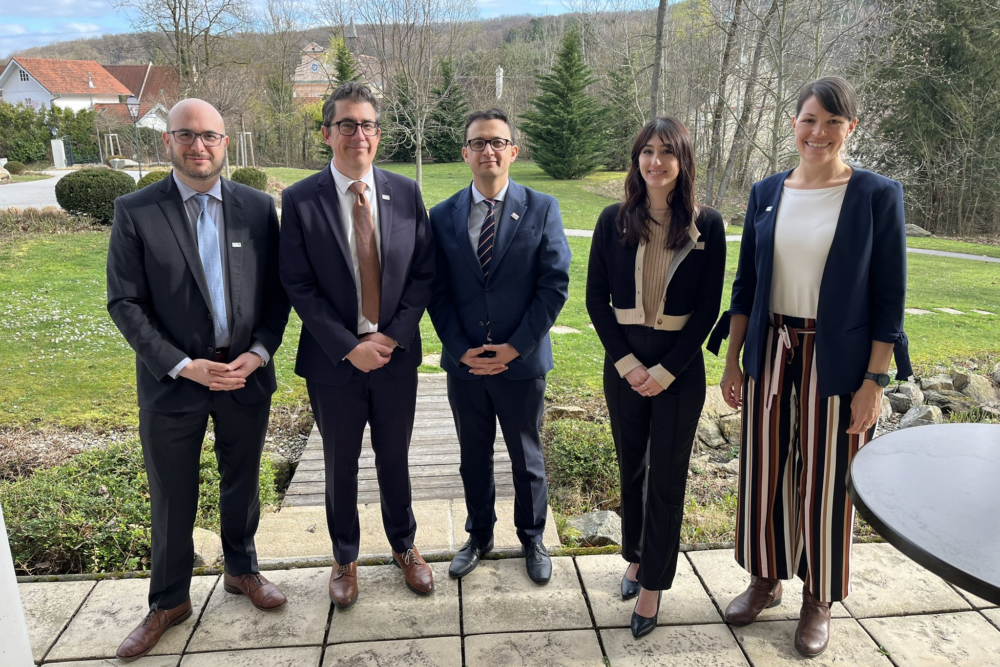
During the 17th meeting of the Global Dialogue, participants developed plans to ensure successful outcomes at ICONS and leverage that momentum to reinvigorate nuclear security internationally.
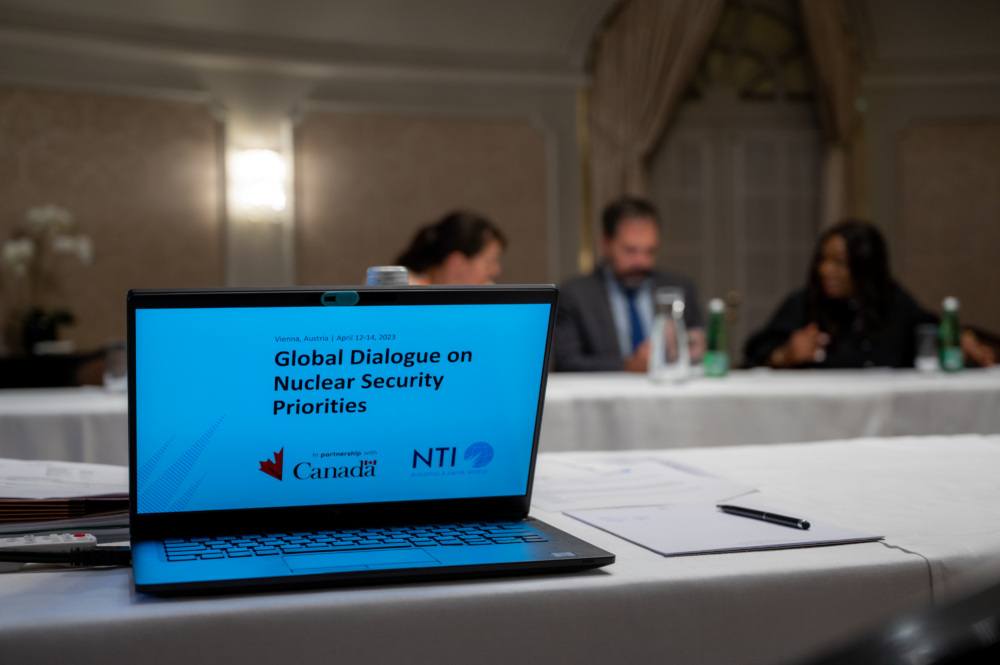
Lessons Learned from 10 Years of the Global Dialogue on Nuclear Security Priorities
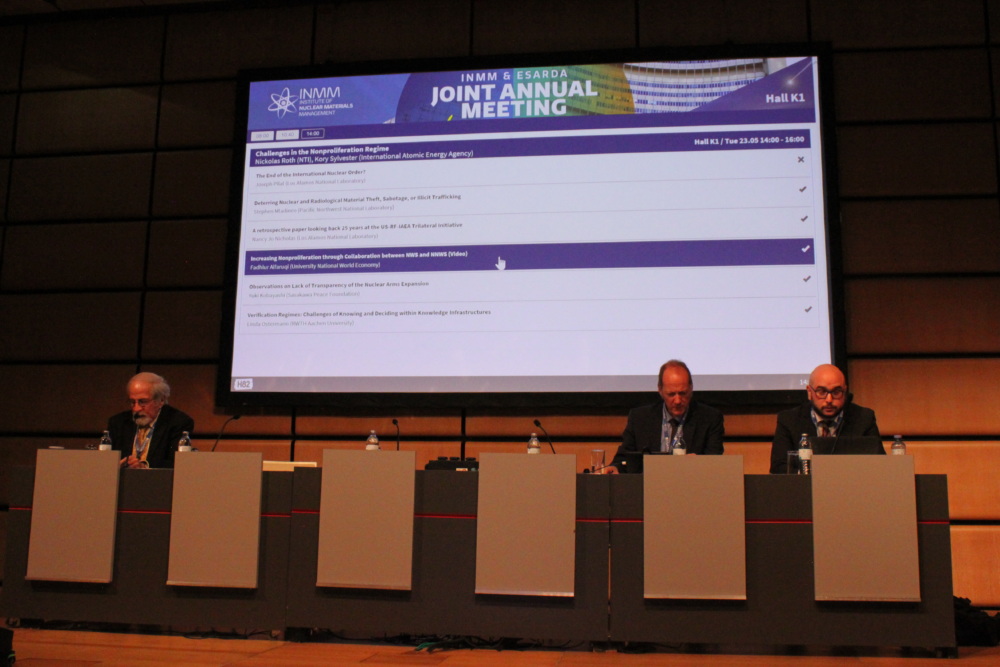
NTI Senior Director Nickolas Roth participated in the second-ever joint meeting of the Institute of Nuclear Materials Management (INMM) and the European Safeguards Research and Development Association (ESARDA).
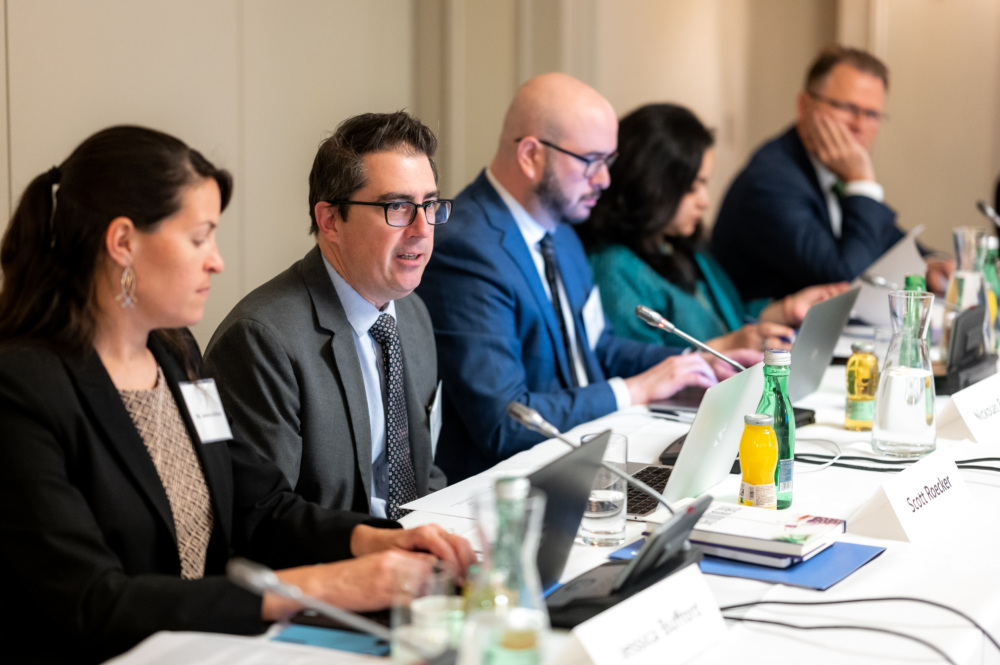
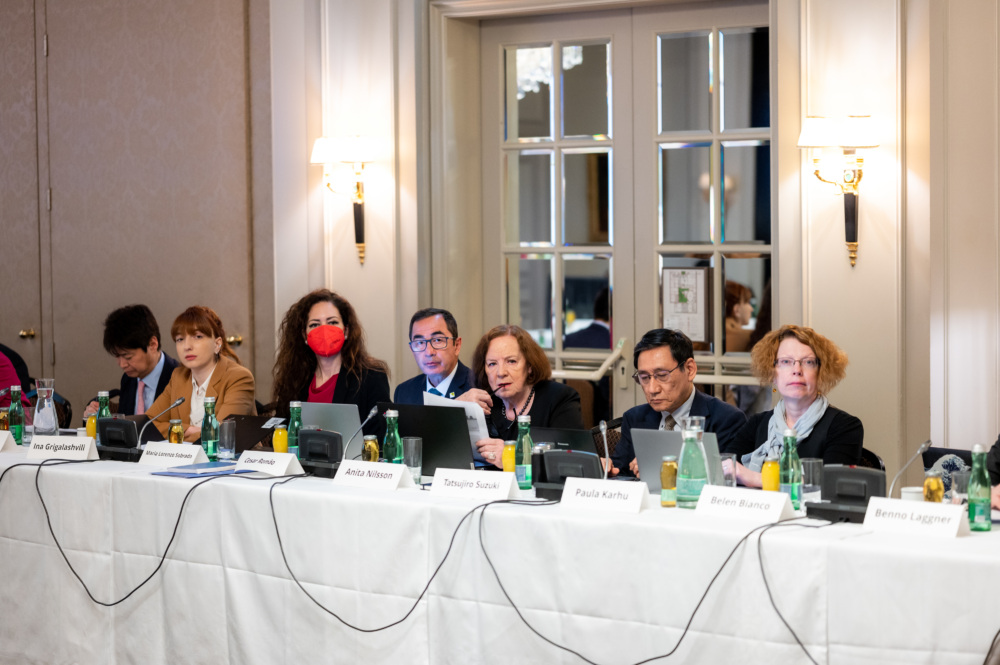
NTI convened nuclear security leaders from across governments and industry, as well as international, research, and non-governmental organizations, for the sixteenth meeting of the Global Dialogue on Nuclear Security Priorities in Vienna, Austria.
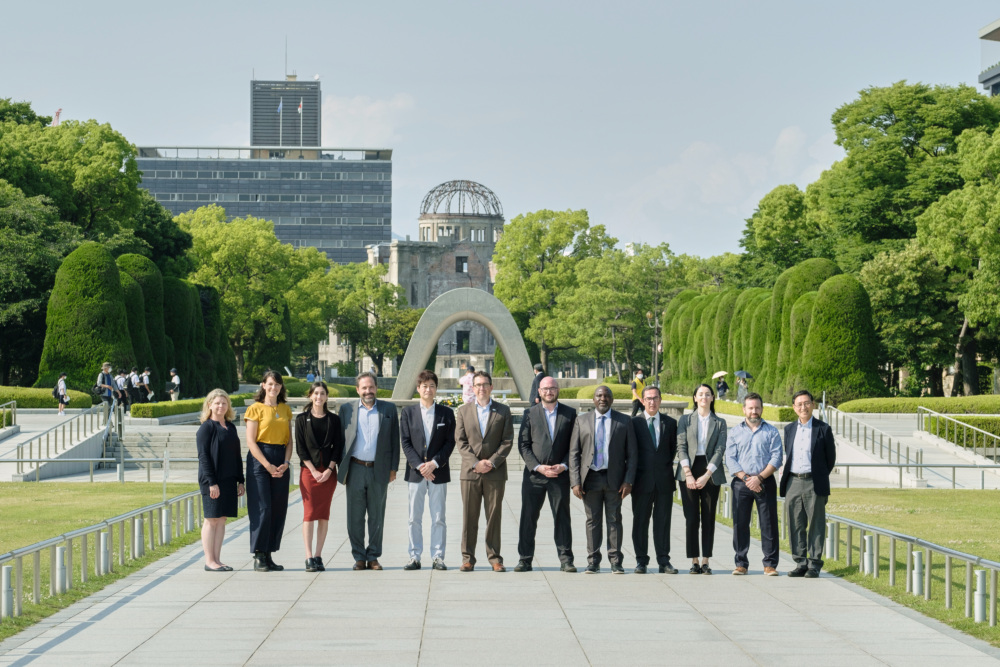
The Nuclear Threat Initiative (NTI) convened the fifteenth meeting of the Global Dialogue on Nuclear Security Priorities in Hiroshima, Japan from June 8-10, 2022.
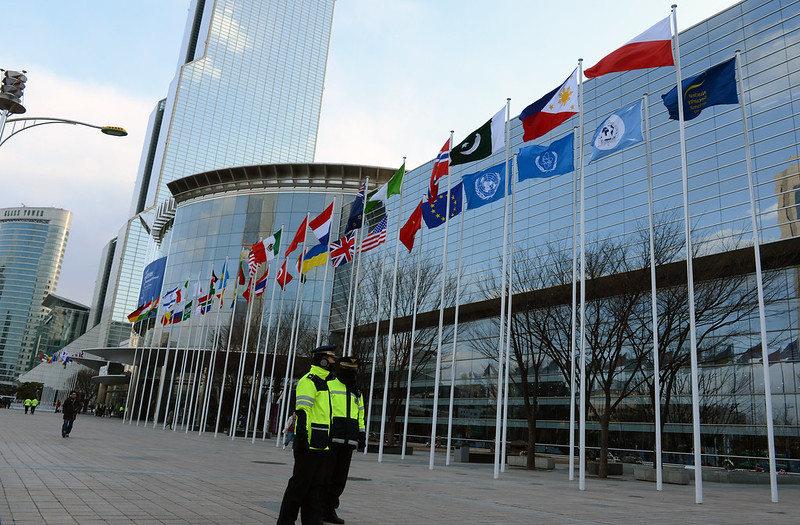
Nuclear security experts from around the world joined NTI Tuesday for a webinar on “Global Tools for Nuclear Security: An Introduction to IAEA Information Circulars on Nuclear Security.”
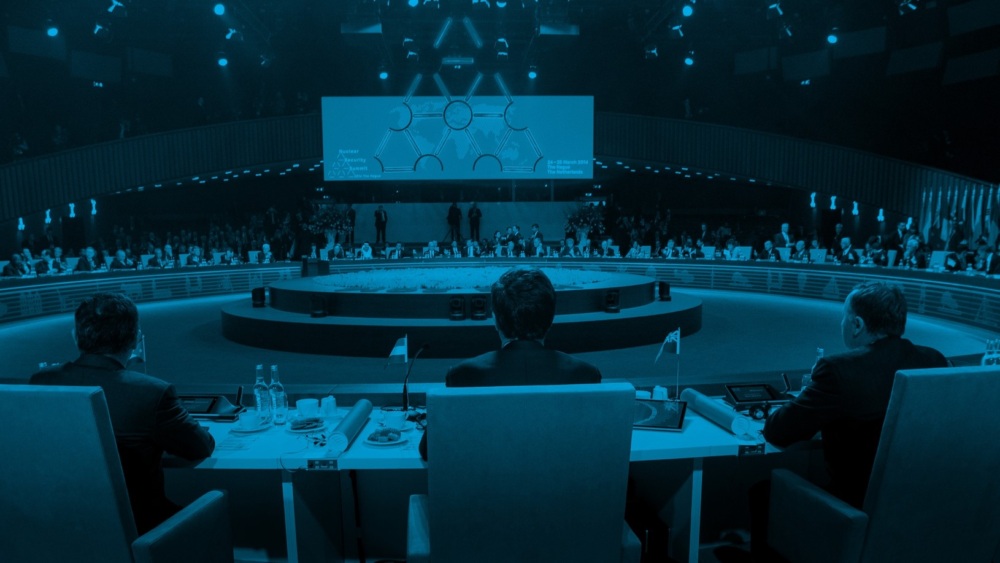
Countries should step up their efforts to close gaps and support, contribute to, and participate in efforts to bolster the global nuclear security architecture.
Regional workshops hosted by NTI to discuss national preparations for next year’s first-ever review of the amended CPPNM/A and additional topics of importance in those regions.
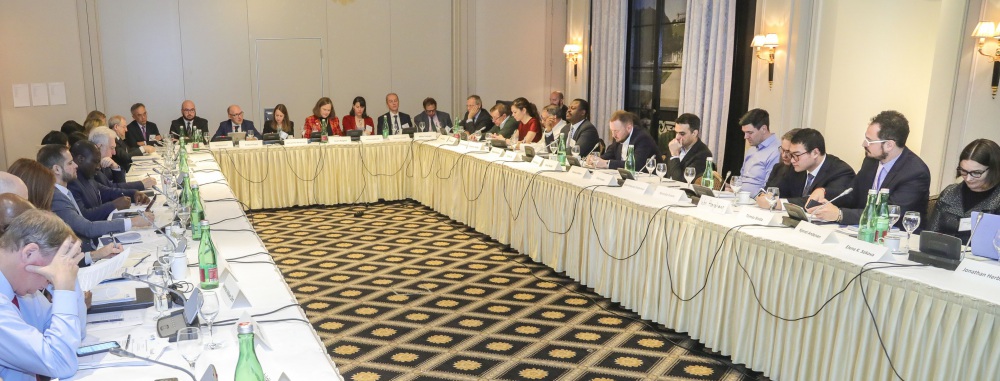
NTI welcomed more than 70 participants from twenty countries to a virtual meeting of the Global Dialogue on Nuclear Security Priorities in March.
Past Event
Virtual
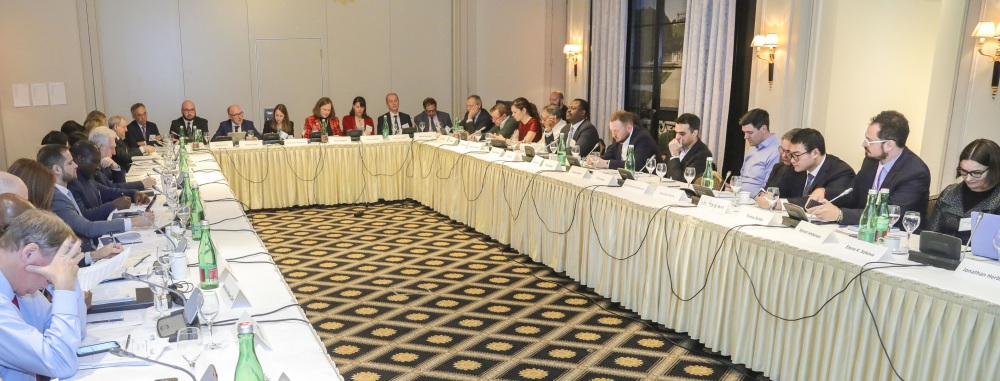
Experts from 21 countries, industry, and NGO's gathered virtually to explore opportunities to strengthen global political attention and engagement on nuclear security
Past Event
Virtual
Past Event
Virtual
Past Event
Vienna, Austria
The 10th Global Dialogue helped participants lay the groundwork for three subsequent international meetings
Past Event
Dusseldorf, Germany
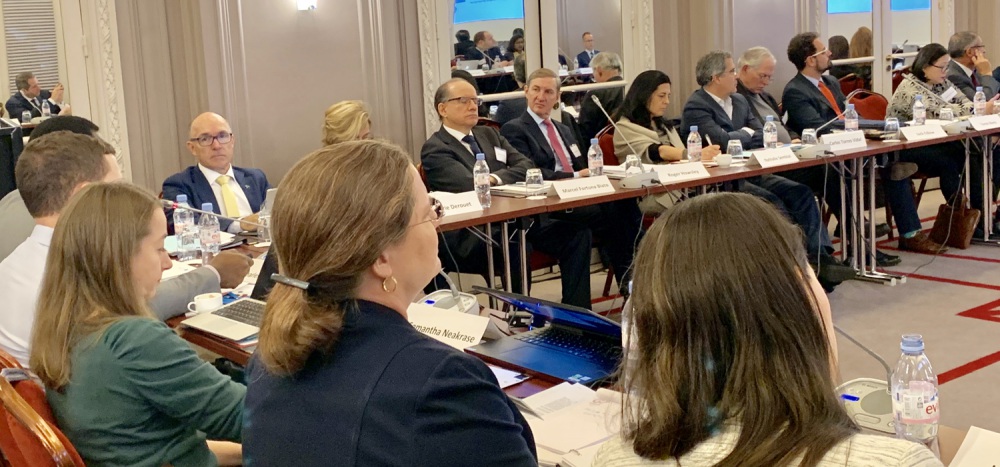
These meetings provide a forum for unofficial dialogue to help accelerate progress toward a comprehensive and effective global nuclear security system.
Past Event
Paris, France
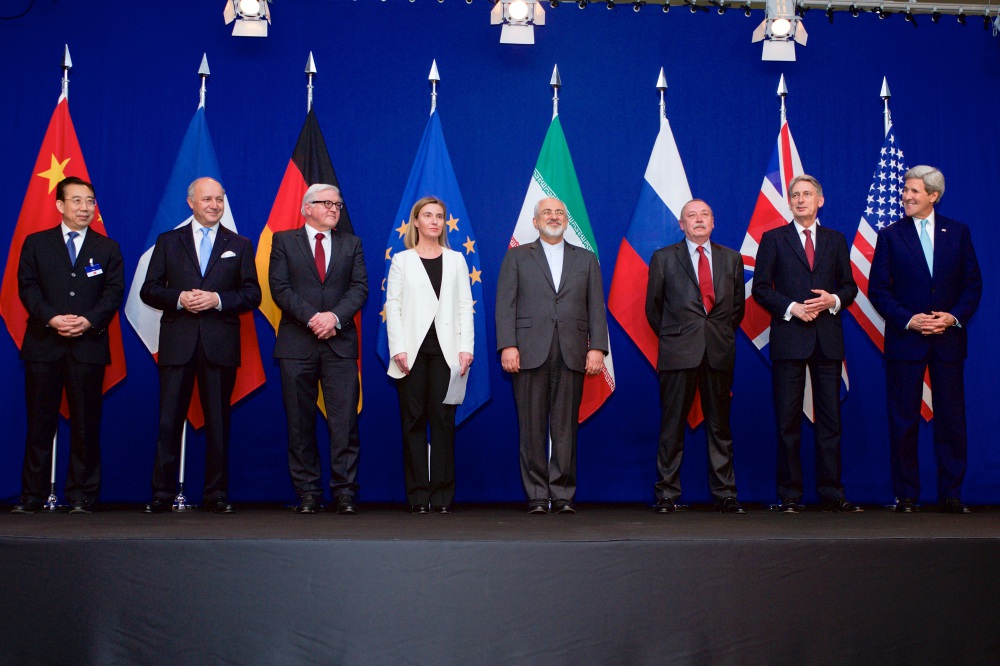
A new statement with 76 signatories from the European Leadership Network, including NTI board member Rolf Ekeus, calls on President Trump to sustain the Iran Nuclear Deal.
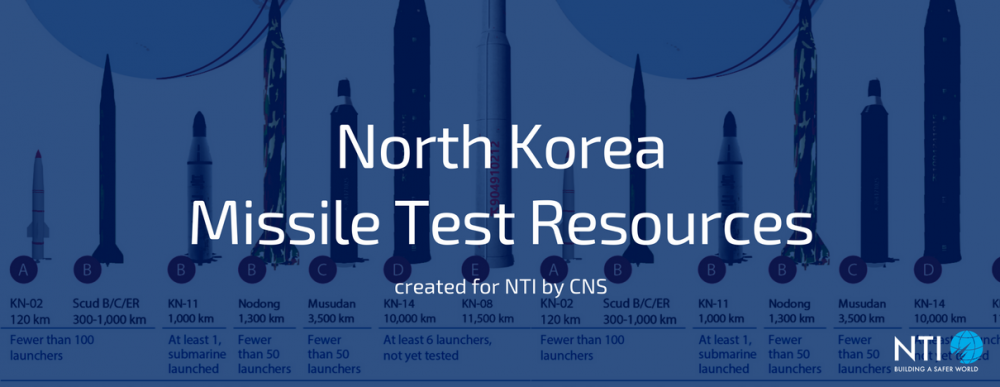
NTI in partnership with CNS offers critical resources to better understand the capacity, background, and history of the North Korean nuclear program.
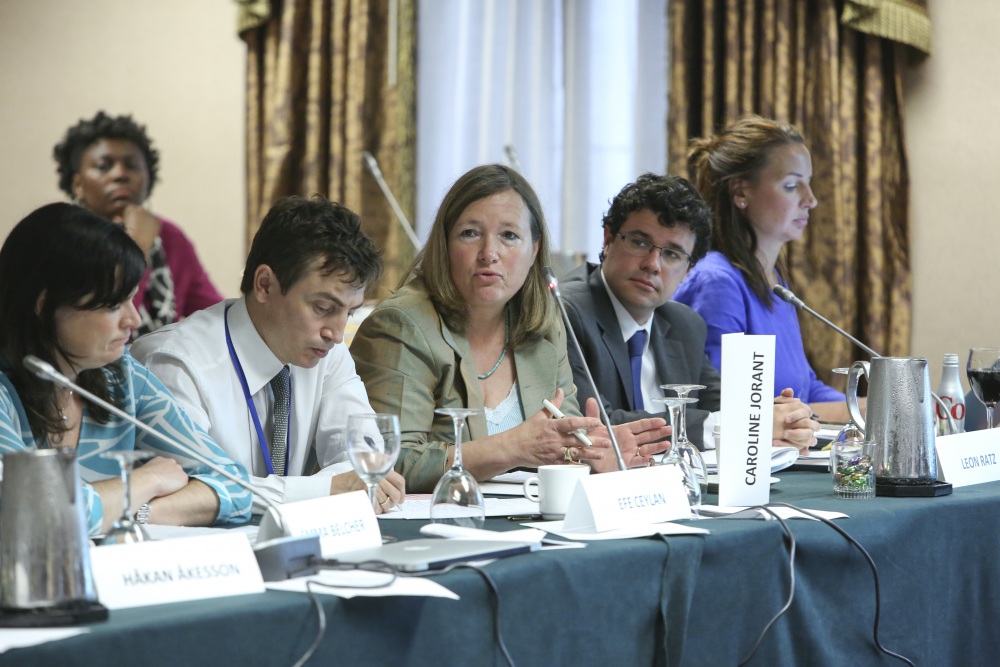
NTI's seventh Global Dialogue on Nuclear Security Priorities will bring together officials and experts to discuss nuclear and radiological materials security and cybersecurity priorities.
Past Event
Warrenton, VA
Next week, NTI, in partnership with the ELN and the FES will host a delegation of European parliamentarians for an International Dialogue on Global Nuclear Security.
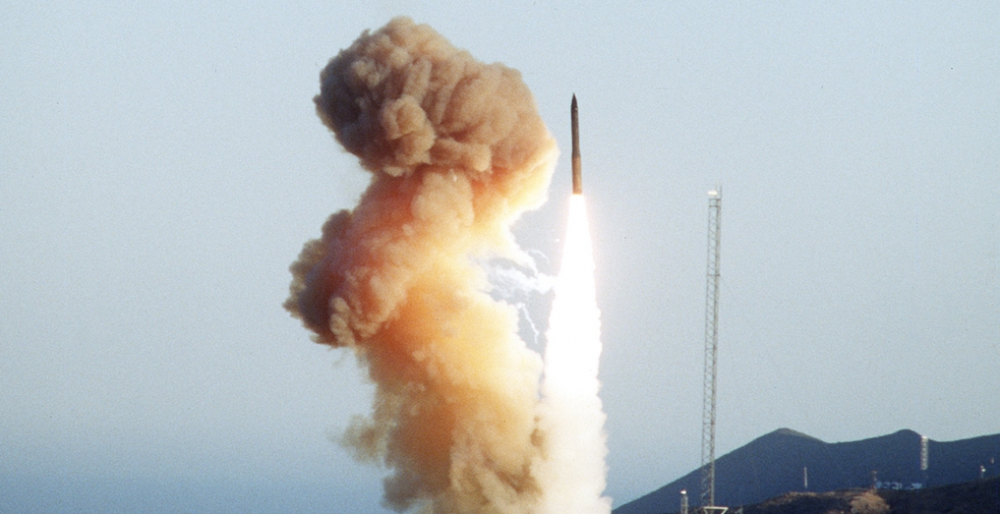
The APLN released a statement encouraging the United States to adopt a nuclear No First Use policy and calling on its Pacific allies to support it.
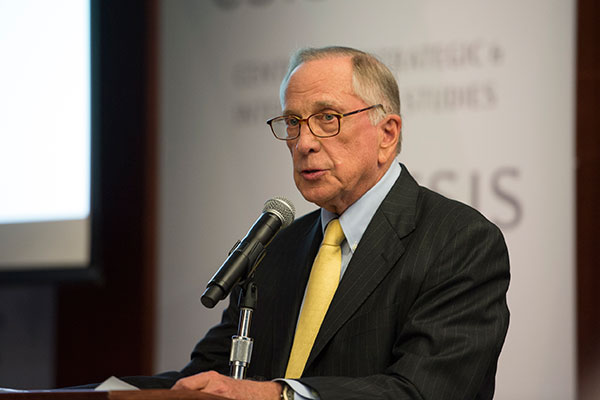
As President Obama makes historic visit to Hiroshima, NTI CEO and Co Chairman lays out practical steps to reduce nuclear risks in the Washington Post.
The Asia-Pacific Leadership Network released a series of articles marking 30 years since the Chernobyl disaster and 5 years since the Fukushima nuclear disaster.
Former Senator Sam Nunn congratulates the international community for achieving an important milestone regarding the entry into force of key nuclear security treaty.
A Call to Action on Nuclear Terrorism signed by more than 140 global political, diplomatic, business and military leaders, and top experts in nuclear security.
The Nuclear Threat Initiative has convened government officials, experts, representatives from international organizations, and industry leaders since 2012 to define what a truly comprehensive and effective global nuclear security system would look like and has developed related recommendations. This paper is the culmination of this work and lays out a vision for strengthening the global nuclear security system and the steps needed to achieve it, including after the summit process ends.
Past Event
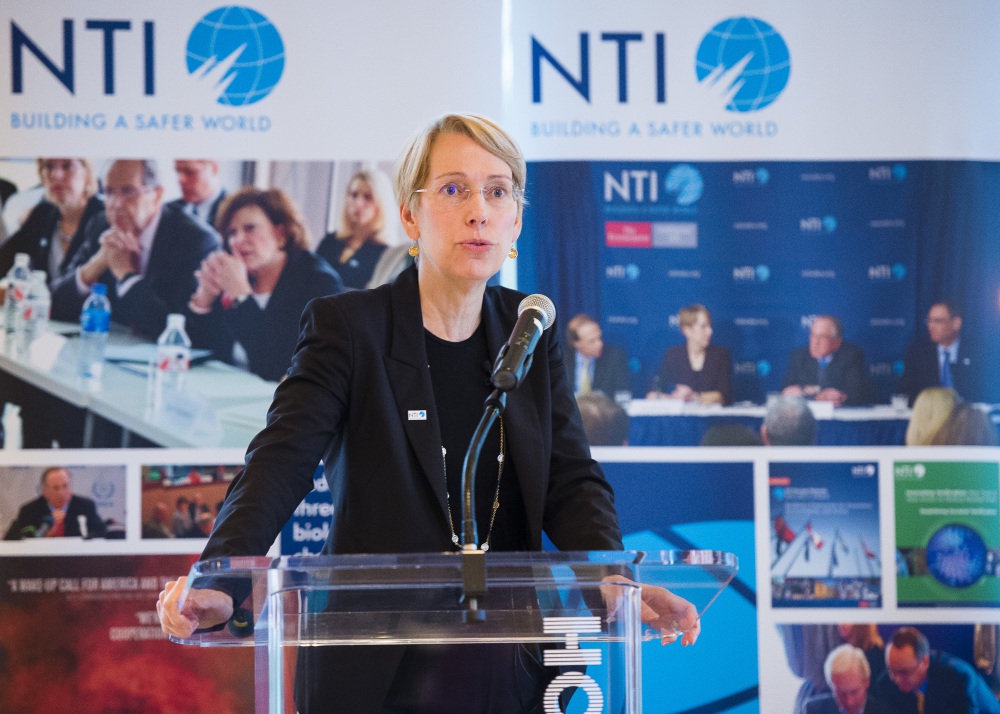
Sam Nunn said that dealing with North Korea has been one of the most difficult challenges for the U.S. government.
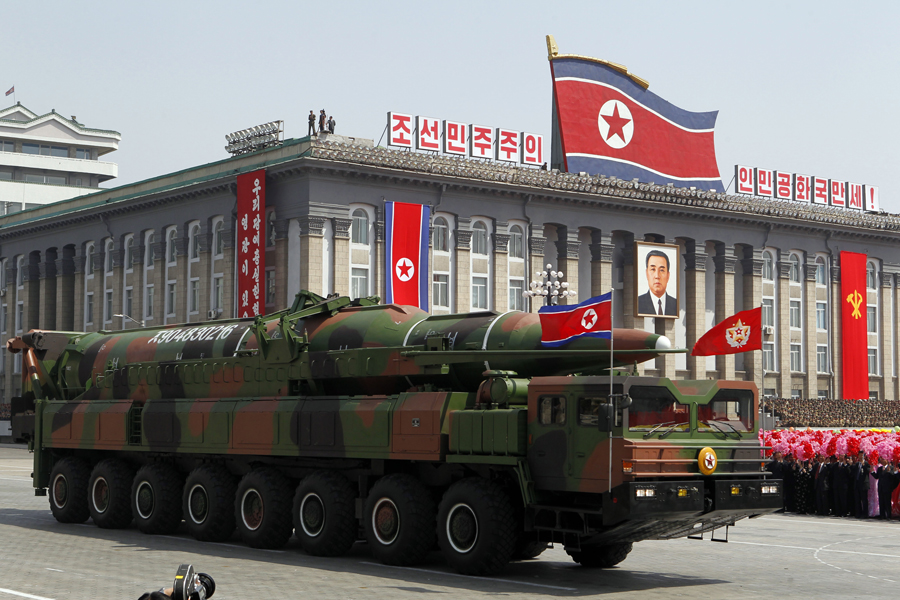
On Wednesday, January 6, North Korea announced that it had conducted its fourth nuclear test.
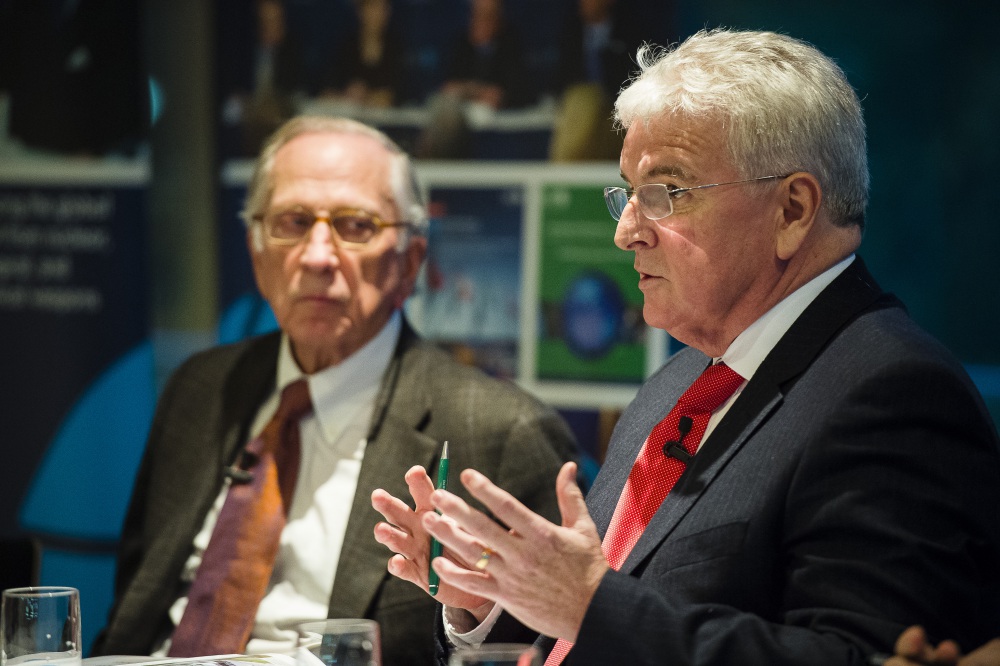
"The best way to stop a WMD attack is to prevent terrorists from obtaining nuclear materials in the first place."
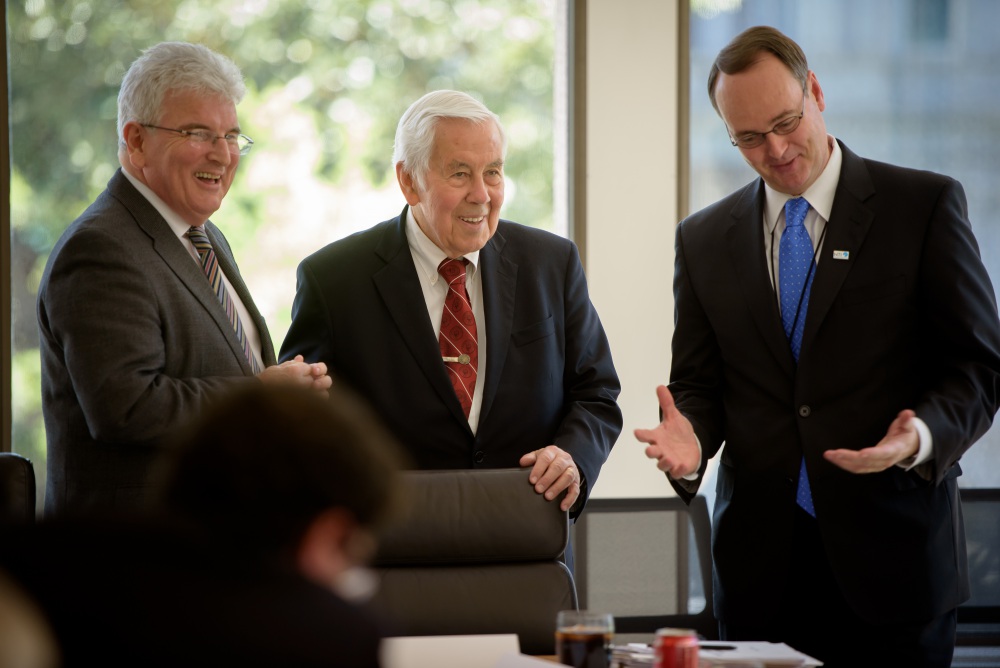
83% of the world’s weapons-usable nuclear materials—PU and HEU is categorized as "military" which falls outside the scope of international nuclear security guidelines.
A call for the creation of regional HEU-Free Zones, whereby countries may not possess or allow for the transfer of HEU within their territory. (CNS)
A roadmap with five pathways to ending civilian HEU use and to beginning the necessary research and development to minimize and ultimately eliminate HEU for naval use.
Past Event
New York, NY
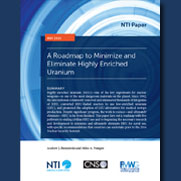
A new paper published by NTI, the Center for Nonproliferation Studies and the Fissile Materials Working Group offers timely recommendations for action that countries can pursue ahead of the 2016 Nuclear Security Summit.
In a speech following the Vienna Conference on the Humanitarian Impact of Nuclear Weapons, NTI Vice Chairman Des Browne calls on all states to join the important discussion on how to reduce and eliminate risks.
Leaders from 46 countries express support for the Vienna Conference on the Humanitarian Impact of Nuclear Weapons and lay out an ambitious four-point agenda for action coming out of the Conference.
In a letter to Austrian Federal Minister Sebastian Kurz, more than 100 former senior political, military and diplomatic leaders pledged support for the Dec. 8-9 Vienna Conference on the Humanitarian Impact of Nuclear Weapons.
Background to support a discussion at a meeting of NTI's Global Dialogue on Nuclear Security Priorities,
This primer provides an overview of the key agreements, guidelines, multilateral engagement mechanisms, and implementation services that make up today’s nuclear security system.
This paper identifies key elements of the existing nuclear security system, reveals gaps in the existing system, and describes the characteristics of a strengthened global nuclear security system.
In advance of the 2016 NSS, this paper explores a range of options to secure and minimize plutonium stocks around the world.
Past Event
Prague, The Czech Republic
This paper defines what is meant by “military materials” and why it is important to include these materials in a global nuclear security system.
Why continuing high-level engagement is needed to address gaps in the global nuclear security system and suggests principles for guiding thinking on how to address those gaps.
Past Event
Newseum, Washington, DC
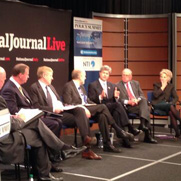
Speaking at the Newseum, NTI Co-Chairman Sam Nunn urged leaders to take action on building an effective global nuclear security system at the 2014 Nuclear Security Summit.

Past Event
Washington, DC
Due to hazardous weather conditions in Singapore, NTI and NSP leaders decided today to postpone the June 25-26 meeting of regional leadership networks.
This rapporteur's report reflects the discussion of government officials, experts, nuclear security practitioners, and other stakeholders at the third meeting of the Global Dialogue on Nuclear Security Priorities in May 2013.
NTI announces three new additions to its prestigious, international board of directors.
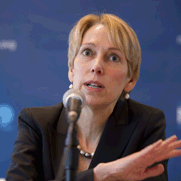
NTI President Joan Rohlfing calls on Congress to pass legislation to ratify two key nuclear security treaties in a new op-ed for The Hill's Congress Blog.
Past Event
Annecy, France
An excerpt from NTI's discussion paper, titled "The IAEA’s Nuclear Security Role
An excerpt from NTI's discussion paper, titled "Next Steps on International Assurances."
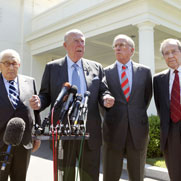
Shultz, Perry, Kissinger and Nunn called for urgent attention on the nuclear threat and outlined key areas for President Obama and world leaders to address.
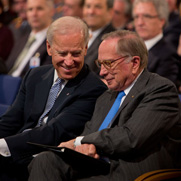
Speakers at the Munich Security Conference paid tribute to former Senators Sam Nunn and Richard Lugar on Saturday, February 2 at the Munich Security Conference.
This is the first in a series of four non-papers from the Global Dialogue on Nuclear Security Priorities
This is the second in a series of four non-papers from the Global Dialogue on Nuclear Security Priorities.
This is the third in a series of four non-papers from the Global Dialogue on Nuclear Security Priorities.
This is the fourth in a series of four non-papers from the Global Dialogue on Nuclear Security Priorities.
This rapporteur's report reflects the discussion of 31 government officials, experts, nuclear security practitioners, and other stakeholders at the second meeting of the Global Dialogue on Nuclear Security Priorities in October 2012.
Past Event
Dalfsen, The Netherlands
This paper addresses the role of best practices and standards in strengthening security.
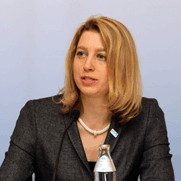
The Vienna-based World Institute for Nuclear Security elected NTI's Corey Hinderstein to its Board of Directors.
The report offers no conclusions or recommendations, but instead describes "some of the prerequisites for thinking about the use of military force against Iran."
This rapporteur's report reflects the discussion of 35 government officials, experts, and representatives from nuclear industry and international organizations at the first Global Dialogue on Nuclear Security Priorities meeting in July 2012.
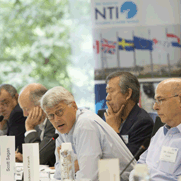
Past Event
Warrenton, Virginia
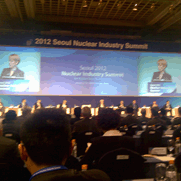
The panel brought together 200 leaders and representatives of the nuclear industry to discuss the role of the private sector in meeting nuclear security objectives.
NTI Vice President Corey Hinderstein joined Stephen Rademaker, Joe Cirincione, and Yochi Dreazen on the Diane Rehm Show to discuss the 2012 Nuclear Security Summit in Seoul.
NTI's Sam Nunn celebrates the engagement of heads of state in Seoul as essential for making progress on nuclear security, applauding the South Korean hosts.
NTI staff and partners offer an array of resources including reports, briefs, and testimony on nuclear materials security prior to the Seoul summit.
NTI believes that nuclear terrorism remains the greatest threat to global security and welcomes the Summit to address this threat as a global challenge.
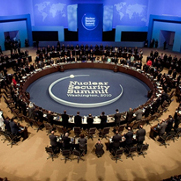
NTI recommends world leaders in Seoul take steps to set priorities for nuclear materials security by discussing what's effective and what makes a difference.

Stephen Schwartz offers a historical perspective on the nuclear weapons budget, proposing solutions to issues created around the lack of budget transparency.
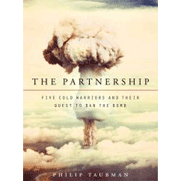
Offering a clear analysis of the danger of nuclear terrorism and how it can be prevented, the book sheds light on the most divisive security issues facing Washington to-date.
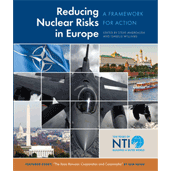
Sam Nunn argues for changing the status quo regarding tactical nuclear weapons in Europe, proposing ten steps for NATO to consider at its May conference in Chicago.
Sign up for regular updates on innovative, real-world solutions to existential threats.