


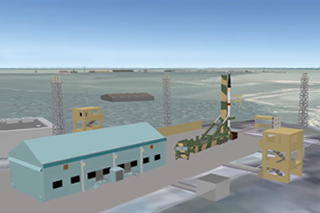
Shahroud Missile Test Site
- Location Shahroud, Tehran province
- Type Missile-Testing
- Facility Status Unknown
Information on global nuclear, chemical, and missile facilities, based on the most credible available open-source material. Prepared for NTI.org by the James Martin Center for Nonproliferation Studies.
Facilities relevant to WMD and missile facilities of key countries around the world. Since definitive information is often classified, the descriptions and mapped locations of these facilities are sometimes speculative, based on the most credible available open-source material.
 India
India Iran
Iran Israel
 Kazakhstan
 North Korea
 Pakistan
 Russia
 Syria
SyriaDisclaimer: Map locations are approximations for illustrative purposes only. Precise positioning has been deliberately avoided. This map is intended for a broad geographic overview only. This material was produced independently for NTI by the James Martin Center for Nonproliferation Studies (CNS).
Interested in using our b-roll footage for your project? Contact us



Sign up for regular updates on innovative, real-world solutions to existential threats.